Friday, September 20, 2013

Have More Kids And Breastfeed Longer To Reduce Breast Cancer Risks

By Shahfizal Musa
Pix Ismail Ibrahim
KUALA LUMPUR, 21 Jun 201 - Women who have more children and breastfeed them for a long period of time can reduce the risk of getting breast cancer.
A pathologist at The National University of Malaysia (UKM), Prof Dr Aishah Md Ali said breast cancer can be reduced by half in developed countries by just having more children and breastfeeding their babies for some time.
Giving her inaugural lecture on ‘Women, Tumor and Cancer, the Pathological Perspective’  she explained in great detail about cancers that affect women.
Prof Aishah has written a book on the subject and had also presented more than 130 papers in various conferences around the world.
Though Malaysia is moving towards the developed nation status it can still significantly reduce the number of such cases if Malaysian women are to practice the risk mitigation methods.
She said those methods had been prescribed in Islam which were later discovered by western researchers.
In Malaysia cancer is the third highest cause of death in hospitals with breast cancer taking the lead, followed by cervix, colon, ovarian, leukemia and lung cancer.
Risks faced by the various racial groups in Malaysia have to be assessed separately as each race have their own lifestyles and their risk has to be assessed separately in order to give the best treatment possible.
She quoted a local study that evaluated the risks of cancer in the three major races, Malays, Chinese and Indians.  
 
The study shows that the risk of breast cancer is highest among Chinese and lowest for the Malays that is 1 in 16 chance for the Chinese to get breast cancer, 1 in 17 for the Indians and 1 in 28 chance for the Malays.
Ethnic
Breast Cancer Risk
Chinese
        1:16
Indian
        1:17
Malay
        1:28
The Chinese also faces a higher risk than the rest when it comes to cervical cancer. The life expectancy is reduced from one to 40 Chinese suffering from cervical cancer. For the Indians the risk is 1 in 50 of a reduced life expectancy, while for the Malays the risk of life expectancy reduction is only 1 in 111.
Ethnic
Life Expectancy Risk
Chinese
        1:40
Indian
        1:50
Malay
        1:111
For cervical cancer 80 percent of the dire cases are found in developing countries as severe cases in developed countries have been reduced due to the use of screening methods enabling early detections.
Present at the lecture was the Deputy Vice Chancellor (Academic and International Affairs), Professor Dato' Ir Dr Othman A. Karim; Dean of the Faculty of Medicine, Professor Dato’ Dr Raymond Azman Ali, academics, physicians and students.

UKMMC First Hospital in Asia to have safer thyroid surgery

By Shahfizal Musa
Pix Izwan Azman
KUALA LUMPUR 22 July 2013 – The National University of Malaysia Medical Centre is the first Hospital in Asia to use the latest technique in thyroid surgery which drastically reduces risk of injury to vocal cords .
With the aid of Automated Periodic Stimulation (APS) combined with existing Nerve Integrity Monitoring system, the risk of injury to vocal cords in thyroid surgery can be reduced by 95 percent, said Prof Dr Rohaizak Muhammad an Endocrine and Breast Surgeon in UKMMC who pioneered this nerve monitoring method for thyroid surgery in UKM and Malaysia.
The technique which is a surgical landmark in thyroid surgery is only practiced in Europe and the United State of America at this moment.
Thyroid surgery is done to remove the thyroid gland located in the neck. The thyroid gland produces hormones that act throughout the body, influencing metabolism, growth and development, and body temperature.
Thyroid surgery or thyroidectomy is needed to treat thyroid thyroid cancer, nodules, and hyperthyroidism. During these procedures, part or all of the thyroid gland is removed.  But there are risks of injuring the recurrent laryngeal nerve (RLN), which is connected to the vocal cord. This can result in patients left with a husky voice or losing it totally.
The RLN is like the power cable that connects your house to the electric grid. Similarly the RLN is the cable that makes your larynx and few other muscles in your throat function. Basically it controls the sensation and movement of your voice box.
Located behind the thyroid glands, surgeons have a hard time, keeping track of it, especially when removing the thyroid gland.
With APS system this can be avoided. It is just like the parking sensor at the back of your car, it starts by giving a beeping sound when there is an obstacle close by.
By using this nerve monitoring system in a thyroid surgery, it operates very much the same way. Every time surgical dissection gets a little too close to the RLN a beeping sound would go off.
How this is accomplished is by attaching an electrode to the vagus nerve. The other end of the electrode goes to the monitor. The electrode inserted in the throat, touching the vocal cord, is periodically stimulated.  This will alert the surgeon if he is too close for comfort to the RLN and might unintentionally harm it. This gives him ample warning to reassess how he wants to maneuver the dissection.
Dr Rohaizak, said based on statistic 3 out of 100 patients who  undergo thyroid surgery face risk of getting their RLN injured.
He jokingly said after performing such surgery that this actually proves the existence of God. The RLN has a different position than other nerves, this fact has been used by people to argue that humans were  created by God.
“The reason why a surgery is successful before the use of this system is not because the surgeon is great but it is God that protects the patients RLN from human error,” he said.
Risk of Thyroid surgery
Having a husky voice may not be a big deal to many but it can create problems when your voice is the bread winner.
Imagine if you work as teacher, lecturer, or singer; it can mean the end of your career.
A lot of people are reluctant to undergo thyroid surgery because after the surgery they may end up with a different problem.
Imagine coming out the operating theater with a different voice or no voice at all.
In some cases the patient would need a tracheostomy where a hole had to be drilled on the throat to facilitate breathing.
Because of the damage to the RLN the vocal cord loses its ability to automatically shut.
So when you eat the food would fall into your air valve causing you to choke.
These are the risks of thyroid surgery in extreme cases. With the aid of APS in thyroid surgery all these can be avoided.

Creative Surgery
The beauty of this technique is that, it does not require  major investment on the part of the hospital to buy new equipment. The equipment needed is already available in most hospitals. It is used in other nerve surgery like spinal surgery and parotid surgery.
But it only requires minor adjustment to the setting of the machine. Then it will become a revolutionary safety instruments for patients in a thyroid surgery.
It does however need an electrode which is connected to the vagus nerve in the neck.
The RLN is a branch of the vagus nerve and once the electrode is connected, the screen will display the safe range for surgeons to operate.
The surgeon then would perform the gland extraction guided by the monitor and the beeping alarm sound. It helps the surgeon in doing his work, because he does not have to stop and identify the location of the RLN every minute.
He can focus on removing the gland without worrying he might cut the RLN. As the equipment is readily available, there is no extra cost needed.
But Dr Rohaizak believes if the surgery is implemented as a teaching program in UKM he is confident that he can discuss with the suppliers to bring the cost further down.
This new procedure is a great improvement in terms of safety to the patients. It does not require any investment so any major hospital can do it.
He is even willing to set up a training program. He does not know how hospitals in the country will respond to this new method. What is for sure, he had already received requests from surgeons from other parts of Malaysia to learn about the technique. Next is to have training workshop in the neighbouring countries.

Thursday, May 2, 2013

Malaysia can now create human organs


BANGI,  28 July 2010. After successfully culturing human skin tissue using
 tissue engineering technology, UKM researchers are now going inside the 
human body trying to create other organs.

Some of the organs that they have began culturing is the heart, bone, 
cartilage, respiratory epithelium (wind pipe), nerve, conjuctiva and even
 cornea that covers the eye. They hope to make human tissues and organs
 or at the very least find a way to aid the repair of tissues or organs with
 regenerative medicine.
Professor Dr Ruszymah Idrus, Head of Tissue Engineering Centre at UKM Medical Centre, when explaining the work that is being carried out at the Centre said:
“Our dream is to make tissues or organs like kidney, liver and heart. These are organs that cannot regenerate
 and if they failed, the patient will be very sick and die. We started with cartilage cells and then skin cells., We 
began with the cells that can be cultured relatively easier. After that we move on to more difficult cells.”
The research in tissue engineering started in 1999 in UKMMC when UKM researchers  first started to 
engineer human cartilage. Dr Ruszymah’s husband Dr Aminuddin Saim who is an Ear, Nose and Throat (ENT)
 Surgeon came across a number of infants being born without an ear.
So they began to replicate an experiment which was done in Harvard Medical School where they both had 
Post-Doctoral Training. Human chondrocytes was successfully cultured and reconstructed into a 3-D ear lobe with
 the help of a scaffold. The experiment in Harvard did not use human cells. The implant was inserted at the back 
of a nude mice. A nude mice is an animal that do not reject human cells. Amazingly the human ear matured and
 feels like a normal ear lobe.  
“It is a small one because we wanted to test the technique whether it works, That was human ear at the back o
f the mouse made from human cartilage cells” said Dr Ruszymah.
To appreciate what regenerative medicine is all about and how it can lead to replacing body parts, some 
understanding about this relatively new medical segment of tissue engineering is necessary.
Understanding Tissue engineering
The field of tissue engineering began when knowledge about 
cells and how they behave were known. In 1838-1839,
 Schleiden and Schwann formulated the so-called "Cell Theory" 
based on their microscopic findings. The theory dictates that
 cell retains a dual existence as a distinct entity and as a building
 block in the construction of organisms. 
Analogically, cells are like employees working in a corporate
 entity. The company make things happen but it is the individuals who keep the smooth running of the company. Just think of the employees as human cells and the company is 
the human body
 If a company wants a winning position in the industry, it must have good and competent employees. This can happen by sending the workers out for training nurturing them
 to work towards the company’s goal instead of against it. 
This is what tissue engineering is all about, sending cells to
 team building camp so they would work towards better health for the human body. 
What this completely new segment of tissue engineering does to a patient is it gives them shorter recovery period
 and less traumatic medical treatment. Imagine a person who needs a knee replacement, instead of having his
 knee cut open and replaced by foreign object, all he will need is an injection and his kneecap will grow back again.
Manufacturing human organs
Similarly, ever since that discovery of the cell theory, scientists have been intrigue with the notion whether 
human cell can be trained outside the human body, pretty much like employees sent by their companies to a team
 building camp. When they discovered that it is possible to do so; to train or manipulate cell, outside the human 
body, now they are taking it a step further. 
“Tissue engineering is about making human body parts with their own stem cells, if for instance a person’s cornea
 is damaged, by manipulating the stem cells from the patient, a new cornea can be created to replace 
the damaged cornea and prevent the patient from blindness,” said Dr Ruszymah.
Heart in progress
Unlike other body parts that have their own healing mechanism, the heart however, cannot heal itself. Currently
 the treatment of coronary heart problems is a by-pass surgery which involves harvesting a vein from your 
leg, cutting his chest open, stopping the heart and stitching the vein taken from the leg to the heart, making a new
 highway for blood to flow into the heart. 
UKM researchers are now working on ways to simplify that process with tissue engineering technology. In the 
future repairing a heart blocked by cholesterol and fat will not involve the cutting open of the heart as in present day surgery. 
“In UKM we’ve just started to culture heart cells.  Of course, we do not culture human heart but we are trying it 
on sheep. In the future, if people have a severe heart attack, we can inject their own stem cell, which have been
 treated to the damage site. It can then grow into new heart muscles and blood vessel.”
Instead of harvesting a vein from the patient’s leg, the blood vessels will grow by itself on the heart. 
This will make open heart surgery today look somewhat barbaric.
Cornea
The researchers have also successfully used tissue-engineering technology to make cornea the layer at the 
front of the eye. If the cornea is damaged, it will become opaque and this will prevent light to enter the eye and causes blindness.
Dr Ruzymah said her team has already achieved success in making cornea and they are waiting to do clinical
 testing before they can bring it to the bed side.
The difference of the cornea tissue engineered by UKM researchers is that they are fully autologous.
“Though there are many places in the world which make cornea but this is fully autologous. The problem with 
autologous engineered tissue is the problem of tissue delivery, it’s difficult to transfer from one geographical
 area to another. Although there are other centres making cornea, the product is not available to our Malaysian 
population.” said Dr Ruszymah.
Cartilage and Bones
Experiments on animals also prove  to be successful for knee joint. This is especially a blessings for osteoathritis 
patients who suffer from debilatating joint pains.
The pain is caused, by damage cartilage in the knee, basically the part that connects the upper leg and the
 lower leg. So when the knee joint rub against each other it causes immense pain. The present treatment is knee
 replacement.
“We’ve also investigated focal defect and osteoarthritis of the knee joint in sheep. The knee joint has a tendency
 to be damaged in sports injury and as we grow old. These injuries can be treated with stem cells injection. 
We’ve proven this in our animal model and the next step is human clinical trial.” said Dr Ruszymah.
What it means really is that the knee joint can be grown back, instead of having to go for a knee replacement.
“ We can also treat non union (bone that does not heal after a fracture with the normal treatment) bones using
 tissue engineering technology, we can connect the bone,” she said.When a bone is broken the present method is  doctors will assist the bone with steel plate 
allowing the broken bones to unite. But using the tissue engineering technology formulated by UKM
 researchers non-union fractured bones can be reconnected again.

Patient wakes up during brain surgery

By Shahfizal Musa
Pix UKMMC


KUALA LUMPUR, 12 March - The National University of Malaysia (UKM) achieved yet another milestone when a patient was made to wake up during a brain surgery last February.

It was UKM Medical Centre first Awake Craniotomy, a procedure to remove brain tumor with minimal or no brain damage to the patient.

Some might think that waking up during surgery is a terrifying experience but in this case it was intentional. The patient needed to be conscious to monitor and preserve his brain functions. The procedure was performed by UKM Neurosurgeon, Associate Prof Dr Ramesh Kumar assisted by three other surgeons, Dr Toh Charng Jeng,  Dr Sanmugarajah Paramasvaran and Dr Ainul Jaffar.

Dr Esa Kamuruzaman was the anesthetist responsible in sedating the patient before his skull was opened up and  for bringing the him to consciousness during the surgery, just before the tumor is cut out.

The complex surgery is commonly done to remove tumors that grow in the eloquent brain. These are areas of the brain that allow us to communicate, perceive, interact and have movement. They regulate our senses, movement and speech, a very important part of living a normal life.

What is fascinating about the unique procedure is the patient participated in his surgery by giving feedback to the surgeon, who in turn will react accordingly. It is quite a scene when the patient woke up during the operation and starts responding to questions. He also gave a priceless grin when he was asked to smile. 

When asked why a patient need to be awake during the surgery, Dr Ramesh explained: “This technique was developed to allow maximum excision of the lesion while causing minimum or no injury to the surrounding normal brain tissue so that the patient has minimal or no functional loss.

“The best way to know that the patient has his functions intact is from his response. You cannot know this when the patient is unconscious”.

Dr Ramesh said the patient will be asked to perform simple task related to the critical area, while the tumor is removed. Any changes in function are monitored and the surgeon stops further dissections in the related area if any adverse effect is detected.

Though current scanning technology like MRI can pin point where the tumor is but it is not accurate enough.

“By resorting only to the MRI scan, the surgery will be very much like walking in a mine field. Any damage to eloquent areas even by a millimeter can mean living with a disability for the rest of the patient’s life. It might harm the ability to speak or move or even think.
“Although functional MRI can show the motor and speech areas, it may not accurately pin point the most important areas and therefore the brain mapping done with direct electrical stimulation on the brain while the patient is awake remains as the most reliable avenue for neurological preservation,” Dr Ramesh said, the patient is given general anesthesia before commencing surgery to render him unconscious. Then the surgeon will get to work and start drilling his skull to gain access to the patient’s brain.

The sedation is given initialy because the scalp and pericranium (tissue overlying the bone) is pain sensitive while the brain is not.

“Once the skull is opened the anesthesia is reversed and the patient is awakened. Upon completion of the excision of the lesion, the patient is put to sleep again and the skull opening is then closed”.

It is no secret that Awake Craniotomy is a very scary option to the patient so before the patient undergo the procedure he is counselled and guided every step of the way.
The patient is now recovering splendidly. He is fit enough to give a press conference to the media.


Wednesday, December 26, 2012

Syria should we care?

http://www.facebook.com/syria.care
PrintPDF

By Shahfizal Musa
BANGI, 20 Dec 2012 -Syrian women and children were raped in front of their husbands and fathers with some of the despicable acts even committed in mosques.
People were slaughtered on a daily basis with some of them mutilated by President Bashir Al Assad’s regime.
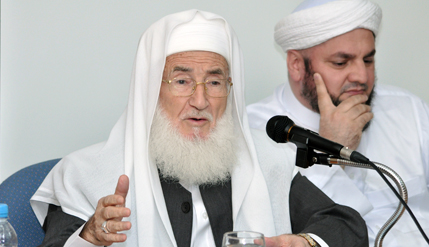
Despite such atrocities they did not receive the help and media attention that they deserved, said Chairman of the Syrian Ulama Council, Sheikh Muhammad Ali Al Sabuni.
The 83 old renowned Islamic scholar came to The National University of Malaysia (UKM) to seek help from Malaysians in whatever way such assistance could be rendered.
Making his emotional plea in Arabic, he said the atrocities committed on the Syrian people are much worse than those committed by Israel on the Palestinians judging from the death toll. 
Syeikh Muhammad Ali said 60,000 Palestinians were martyred in 60 years but over the last two years of intense oppression in Syria, 60,000 people were killed brutally. That is the official figure whereas the unreported death is 5 times more, he said.
The problem is that the Syrian plight is overshadowed by the Palestinian cause. Muslims don’t see helping the Syrian is as important as helping the Palestinian. 
The Syrian people do not just need money and prayers, they need every Muslim whether in Malaysia, Saudi Arabia or Indonesia to be united about the importance of helping Syrian.
The situation in Syria is not a conflict between the Sunnis and the Syiahs because to call what is happening in Syria a conflict is to suggest two parties of equal strengths. But the actual situation is where the defenseless ordinary people are being massacred because they are Sunnis. 
Syeikh Muhammad Ali said not even one mosque in Syria is not damaged or destroyed by the regime, which is supported by Iran.


He said no hospital would be willing to help the Sunnis; if they are injured or maimed they are left in pain until they die as even family members can’t help because those who helped will be tracked down and killed. Thus the injured who needs urgent medical attention is left untreated, the best they could hope for is for the injured to die quickly.
Syeikh Muhammad Ali’s statement that Syria is as important if not more so than Palestine was emotionally objected to by a Palestinian saying that would be tantamount to taking away help and attention from Palestine.
But her comments was responded by Abu Anas, another member in the audience, a Palestinian Medical Doctor who have worked on the frontlines in Gaza.
He said the situation in Syria is much worse than in Palestine because at least in Gaza they are dealing with the Isreali soldiers who only has the courage to attack from the air, but in Syria the people who are Sunnis are murdered in their own homes, their children are slaughtered in front of their own eyes,
They have no food and children freeze to death because there is no heating, no medical help and hunted and slaughtered like animals.
He agrees with Syeikh Muhammad Ali that right now, the situation in Syria is much worse than in Palestine.
Syeikh Muhammad Ali clarified that he was not asking Muslims wanting to help to make a choice but was only trying to correct the misconceptions among Muslims that Syrian oppression is not bad.
The talk organised by the Institute of West Asian Studies was attended by more than 200 students and lecturers.
The mindset of Muslim is that they feel that they are betraying Palestine if they focus on Syria. Nobody is willing to say that the atrocities in Syria is worst than Palestine. Even when Hamas and Palestinian themselves have admitted that what happen in Syria is much much worst. 
Muslims are actually suffering from a guilty conscience of their years of indifferent towards the Palestinian Issue. Now they are doing the same mistake that they did to Palestine. They are ignoring Syria. 

‘Abdullah bin Hawalah narrated that the Messenger of Allah (peace be upon him) said: “You will prepare some armies: an army for Sham, an army for Iraq, and an army for Yemen.” So, ‘Abdullah said: “Choose one for me, O Messenger of Allah!” So, he said: “
Go to Sham. Whomever is unable to do so should go to Yemen, as Allah – Mighty and Majestic – has sufficed for me Sham and its people.” Rabi’ah said: “I heard Aba Idris narrating this hadith and saying: “Whoever is sufficed by Allah can never be lost.”

Tuesday, October 23, 2012

Hollywood favorite villain

A
The negative international image of the Arabs and Muslims as violent, intolerant and out of control people has been attributed to films continuously churned out by Hollywood. A visiting professor from California State University, Prof Dr Sophia Pandya said Hollywood has for decades been producing and distributing films depicting a very bad image of the Arabs and Muslims for the global market.

Speaking at a discourse jointly organised by the Institute of West Asian Studies (IKRAB) and the Institute of Islam Hadhari (HADHARI) and the Turkish Dialogue Society here today, she said such negative portrayal had been made from the very beginning from cartoons like Aladdin to blockbuster movies.

 Arabs are portrayed as a subhuman barbaric and a threat to be feared by western society. This dehumanising of the Arabs and Muslims has nurtured hatred for them by the Americans for a long time. What is sad is that Muslims themselves support Hollywood by buying and watching those movies that portray Muslims in a preposterous manner.

 Muslim watch it because the image portrayed was so far off the mark, that Muslims think it is silly and is not about them. Yet this fictionalised image of Arabs and Muslims is taken as fact by non Muslims and the West, she said. She referred to a groundbreaking documentary on how Hollywood have been slandering Arabs and Muslim for decades, The negative international image of the Arabs and Muslims as violent, intolerant and out of control people has been attributed to films continuously churned out by Hollywood.

A visiting professor from California State University, Prof Dr Sophia Pandya said Hollywood has for decades been producing and distributing films depicting a very bad image of the Arabs and Muslims for the global market. Speaking at a discourse jointly organised by the Institute of West Asian Studies (IKRAB) and the Institute of Islam Hadhari (HADHARI) and the Turkish Dialogue Society here today, she said such negative portrayal had been made from the very beginning from cartoons like Aladdin to blockbuster movies. Arabs are portrayed as a subhuman barbaric and a threat to be feared by western society.

This dehumanising of the Arabs and Muslims has nurtured hatred for them by the Americans for a long time. What is sad is that Muslims themselves support Hollywood by buying and watching those movies that portray Muslims in a preposterous manner. Muslim watch it because the image portrayed was so far off the mark, that Muslims think it is silly and is not about them.

Yet this fictionalised image of Arabs and Muslims is taken as fact by non Muslims and the West, she said. She referred to a groundbreaking documentary on how Hollywood have been slandering Arabs and Muslim for decades, Reel Bad Arabs- How Hollywood Vilifies People by Jack Shaheen. The documentary is a compilation from about one thousand films with racist remarks demeaning the Arabs.

Such remarks if made against the Jews or African Americans can cause an uproar, she said. Prof Pandya said Hollywood inherited the blatant racist portrayal of the Arabs and Muslims from the Europeans who used to colonise the Arab region in the Middle East and North Africa. The colonial powers were on a quest for raw materials during the industrial revolution leading them to systematically robbed countries out of their resources. They argued that the Arabs are barbarians which needed the colonial powers to bring modernisation.

 The late Edward Said in his book Orentalism explained that the colonial powers portray the Arabs as a threat and something to be feared. Debates in the British parliament then depicted the Arabs as people who deserved to be colonised, occupied and controlled even if it involves violence. Thus the perception that Arabs and Muslims are bad people who deserved everything that is done to them is deeply rooted and entrenched in western perceptions.

Though such image is a gross injustice it continues unabated and will keep on, Prof Pandya said. She quoted Martin Luther King’s idea on peace “peace is not the absence of tension but it is the presence of justice”. Justice has not been done to the Muslims and Arabs, Prof Pandya said. Present at the talk was the Director of Islam Hadhari, Prof Dato’ Dr Mohd Yusof Hj Othman, academic staff and the public. The documentary is a compilation from about one thousand films with racist remarks demeaning the Arabs.

 Such remarks if made against the Jews or African Americans can cause an uproar, she said. Prof Pandya said Hollywood inherited the blatant racist portrayal of the Arabs and Muslims from the Europeans who used to colonise the Arab region in the Middle East and North Africa. The colonial powers were on a quest for raw materials during the industrial revolution leading them to systematically robbed countries out of their resources.

 They argued that the Arabs are barbarians which needed the colonial powers to bring modernisation. The late Edward Said in his book Orentalism explained that the colonial powers portray the Arabs as a threat and something to be feared. Debates in the British parliament then depicted the Arabs as people who deserved to be colonised, occupied and controlled even if it involves violence. Thus the perception that Arabs and Muslims are bad people who deserved everything that is done to them is deeply rooted and entrenched in western perceptions.

Though such image is a gross injustice it continues unabated and will keep on, Prof Pandya said. She quoted Martin Luther King’s idea on peace “peace is not the absence of tension but it is the presence of justice”. Justice has not been done to the Muslims and Arabs, Prof Pandya said. Present at the talk was the Director of Islam Hadhari, Prof Dato’ Dr Mohd Yusof Hj Othman, academic staff and the public.

Thursday, July 19, 2012

No more hypertension during pregnancy

KUALA LUMPUR, 27 April 2012 - A group of four final year medical students from The National University of Malaysia (UKM) have made history with a discovery that can prevent hypertension in pregnancy. 

The discovery said to be the first in the world was made by Dr Noorfaizahtul Hanim binti Md. Nawawi, Dr Lim Jing Fen, Dr Melissha binti Luqman and Dr Faizuddin bin Zoklkeplai. They graduated earlier this month. 

The discovery has been accepted for publication in a high indexed international journal, a statement by the supervisor of the students, the Deputy Dean of Graduate Studies of the Faculty of Medicine UKM, Prof Dr Zainul Rashid bin Mohamad Razi said today.

Prof Zainul Rashid said hypertension in pregnancy is still one of the main causes of maternal death all over the world.

“Women in their first pregnancy are more susceptible to develop hypertension with an incidence of between 10% to 15%. Many methods have been tried to prevent this condition such as supplementation with aspirin, zinc, Vitamin E and anti-oxidants. However, to date, none of these methods have proven to be successful. 

“Thus, the only method to reduce the morbidity of this condition is to control the blood pressure when it appears in pregnancy to buy time for the baby to be more matured for delivery.

“This, however, exposed the mother to all the complications of hypertension in pregnancy such as eclamptic fits, bleeding due to placental separation, premature delivery as well as maternal and fetal death,” Prof Zainul Rashid said.

The group who were then in their 4th year of studies were doing research on mothers in their first pregnancy following IVF. They noted that the incidence of hypertension among the mothers were very low compared to other mothers in their first pregnancy who conceived spontaneously.  

Prof Zainul Rashid said the only difference were that the mothers who conceived by IVF were supplemented with a progestogen hormone, dydrogesterone for the first 16 weeks of their pregnancy. From 116 mothers who conceived by IVF, only two(1.7%) developed hypertension in pregnancy as compared to 15(12.9%) in 116 other women who conceived spontaneously.

Prof Zainul Rashid the difference was very significant statistically.

“With this finding, it is now possible to reduce the incidence of hypertension in first pregnancies thus further reducing maternal mortality due to this condition by taking the hormone dydrogesterone during the early part of their pregnancies.

“Further studies will be performed by other students in the UKM Medical Faculty on other pregnant mothers who are at high risk of developing hypertension in pregnancy such as twin pregnancies, obese and mothers older than 35 years,” Prof Zainul Rashid said.

The students took 1 year 10 months to complete their studies, which was one of the requirements for UKM medical students to pass their medical course.

The newly qualified doctors will receive a prize of RM1000.00 each for their discovery from Prof Dr Zaleha Mahdy, the Deputy Dean of Undergraduate Studies of the Faculty at a special ceremony at the Faculty

Reverse aging with palm oil


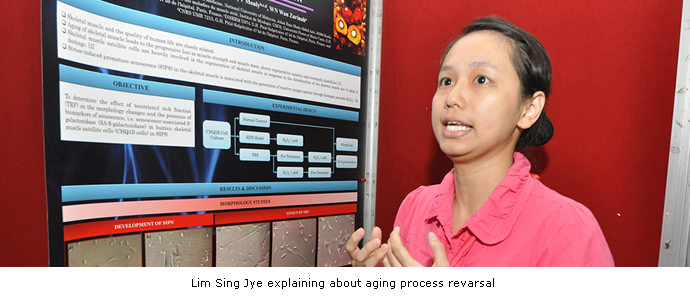
KUALA LUMPUR, 18 July, 2012 – Research findings by a team of postgraduate students at The National University of Malaysia (UKM) revealed that Tocotrienal Rich Fraction (TRA) derived from palm oil may have the potential to reverse the aging process.
The initial findings made by the students from the Department of Biochemistry at the Medical Faculty discovered that TRA actually has the potential to reverse the shrinking of satellite cells found in skeletal muscles. These are cells in muscles that support the skeleton.
The discovery is one of over 50 such findings exhibited in the ongoing 14th Health and Medical Research Week (RW14) being held at the Faculty of Medicine here from Tuesday 17 July.
Lim Jing Jye, who is doing his Masters and involved in the research said that the cells in question have been closely linked to aging since they shrink with age.
What the team did was to take human cells from 5 day old infants and exposed them to conditions that simulated the causes of aging.
The team found that the cells that have shrunk grew back to almost its original size when treated with TRA.
Chairman of RW14, Prof Yasmin Anum Mohd Yusof from the Biochemistry Department when asked about the research at a press conference said: “While it is too early to say that aging of an octogenarian can be reversed, the findings have the potential at the very least too delay the aging process.”
TRA may offer not just a longer life but more importantly a healthier life especially to the aged.
She said the focus of the study is not to find the ‘fountain of youth’ but how to make people live longer and at the same time in good health.
There were many other equally significant findings made that were exhibited such as anti oxidant and anti-tumour properties found in ginger (Zingiber officinale).
There was also research done on ‘belacan’ (shrimp paste) titled “Risk Assesment of local Belacan Intake”. Belacan which is a favourite flavouring ingredient used in many Malaysian dishes is said to contain arsenic and lead which exceeded the limit of Malaysian Food Act 1983 and Food Regulation 1985.
However the findings revealed that the daily intake is much lower than the provisional tolerable weekly intakes given by Food and Agricultural Organisation (FAO) and World Health Organisation (WHO) and could not be considered to be harmful to humans.
Over 200 participants consisting of postgraduate students and lecturers from the Faculties of Medicine, Dentistry, Health Sciences, Pharmacy and the Medical Molecular Biology Institute (UMBI) are taking part in the programme.

It include a series of lectures meant to hone in the skills of the researchers and lecturers in preparing their research proposals and nurturing multidisciplinary collaborations.
The RW14 is one of the initiatives by UKM Medical Centre (UKMMC) to equip lecturers and students with the knowledge and skills they need to get their research proposals approved and later recognised at the international level.
Dean of the Medical Faculty and Director of UKMMC, Prof Dato’ Dr Raymond Azman Ali, Deputy Deans and heads of department, students, clinicians and lecturers attended the official opening of the RW14.

Wednesday, April 25, 2012

Brain drain or Brain Circulation

KUALA LUMPUR, 19 APRIL 2012- A number of ENT specialists trained in The National University of Malaysia (UKM) have been snatched to work abroad thereby regarded as being part of the brain drain phenomena for the country. However its Vice Chancellor, Prof Tan Sri Dato' Wira Dr Sharifah Hapsah Syed Hasan Shahabudin looked at it differently.

 She is of the view that these experts who chose to work abroad will one day come back home and will then bring back their expertise to the country. Opening the 4th ASEAN Academy of Neuro-Otology & Audiology Congress (AANOA) here today, she likened it as ‘brain circulation’ rather than ‘brain drain’. Neuro-Otology is a branch of clinical medicine which studies and treats neurological disorders of the ear. It is a subspecialty which stems from Ear, 

Nose and Throat (ENT) specialisation. She said their going abroad will allow them to gain invaluable experience and will one day bring their expertise back home. Though it does cause a shortage to the country in the immediate term the specialists nonetheless are helping people no matter where they are. What is more important is that the people should benefit regardless of boundaries, she said. Prof Sharifah Hapsah also said that new developments in ENT treatment like cochlear implants have revolutionised the treatment of hearing impairment where hearings can now be revived even in cases once considered impossible. Sign language may one day become obsolete, she said.

 Hearing impairment needed to be detected early as it can have a detrimental effect on an individual’s learning ability, she said. UKM began its coclear implant programme in 1995 and to date had given such implants to 295 patients. The honourary founding president of the conference, Prof Dr Suchitra Paransuk in her keynote address said she was treated with skepticism and sometimes ridiculed when she said that hearing disability can be tackled with Neuro-Ontology some 40 years ago. She had then just got back home from studying abroad. Now the Thai government is subsidising cochlear implant surgery while Neuro-Ontology is also recognised globally.

 Prof Suchitra said though cochlear implant surgery is accepted, the treatment depended on facilities available in a country. In some places it is only available to those who can afford it. This has to change because every child deserves the gift of hearing. UKM started its cochlear implant programme in 1995. The cochlear team also trained health personnel from other hospitals both locally and foreign.

 The AANOA conference which began today ends on Saturday 21 April. It also consists of various workshops on the latest technique available for ear surgery. AANOA President, Prof Dato’ Dr Lokman Saim, participants and guests from United Arab Emirates, Thailand, Australia, Singapore, Indonesia, Malaysia and the Philippines attended the conference.

Saturday, April 14, 2012

Cure for Osteoporosis


KUALA LUMPUR, 6 April 2012 - Researchers from The National University of Malaysia (UKM) have discovered that ‘tocotrienol’ (a form of Vitamin E) derived from palm oil, can strengthen brittle bones thereby reversing incidences of osteoporosis.

This discovery was made by Prof Dr Ima Nirwana Soelaiman and her team, Assoc Prof Dr Norazlina Mohamed, Assoc Prof Dr Ahmad Nazrun Shuid and Dr Norliza Muhammad of the Faculty of Medicine, UKM after a series of comprehensive studies.

Prof Ima who is Head of the Bone Metabolisme Research Group, said: “our extensive animal studies have shown that Tocotrienol can improve the bone structure of osteoporotic bone and bring it back to its original condition.”

She said that the studies also revealed that besides reversing osteoporosis, Tocotrienol can also prevent the development of osteoporosis. The studies conducted over fifteen years have produced consistent results time after time; which is that tocotrienol can prevent and cure osteoporosis.

Her work has won awards in international scientific expositions, such as at the Invention and New Product Exposition (INPEX2008), Pittsburgh, Pennsylvania, USA, 2008 [Gold Medal, Award of Merit] and 34th International Exhibition of Inventions, New Techniques and Products, Geneva, Switzerland, 2006 [Gold Medal, with Merit]. She has also published almost 80 scholarly articles in indexed journals, of which half are on vitamin E and bones.

Tocotrienol is a family of vitamin E which is derived from palm oil. In recent years, Tocotrienol has gained recognition as a potent antioxidant that protects cell membranes and DNA from free radical damage. Free radicals are by products generated when oxygen is converted into fuel for the human body. As an antioxidant tocotrienol prevents cellular damage. Therefore diseases such as osteoporosis which have strong oxidative component will benefit from tocotrienol.

Understanding osteoporosis

Bone is made of a hard outer shell with a mesh of collagen (tough elastic fibres), minerals (including calcium), blood vessels and bone marrow. This mesh looks a bit like a honeycomb, with spaces between the different parts.

Healthy bones are very dense and thus the spaces inside the bones are small. However in bones affected by osteoporosis, the spaces are larger and this make the bones weaker, less elastic and more likely to break.

As a living tissue, bones constantly repair themselves in a process called bone turnover. There are cells which break down old bones (osteoclasts) and cells which build new bones (osteoblasts). Bones become brittle when the osteoclast activity predominate over osteoblast activity. This results in less bone, since bone is broken down at a faster rate than it can be replaced.

These fractures most commonly occur in the spine, wrist and hips but can affect other bones such as the arm or pelvis. A fracture is a huge problem to an osteoporotic patient, since osteoporotic bone is slow to heal and a fracture may not heal completely.
These patients will have to depend on others to do simple tasks such as going to the bathroom.

Osteoporosis Risk Group

Osteoporosis is caused primarily by hormonal imbalance and women are four times more likely to get osteoporosis then men. When women reach menopause, their estrogen production will go down drastically, causing increased bone loss leading to osteoporosis. Women with a low pre-menopausal bone mass are more prone to develop osteoporosis. Tocotrienol can prevent this from occurring.

Men are, however, not totally immune to osteoporosis. Men can become osteoporotic if they lose their testosterone and this is also considered to be osteoporotic due to hormonal deficiency. This problem usually arises when men get very old or if there are problems with their testicles such as testicular tumor that require their testicles to be removed. Removal of the testicles will then cause testosterone to be depleted in the body leading to osteoporosis.
People who are on steroid treatment for asthma, arthritis and cancer can developed osteoporosis as a side effect. From her studies tocotrienol was also shown to reverse steroid induced osteoporosis.

Nicotine found in cigarrette smoke is another risk factor for osteoporosis. Chronic smokers have been shown to have lower bone mineral density compared to non-smoker. Studies by Prof Ima and her team have found that tocotrienol can reverse the osteoporosis and bring the bone back to normal once the nicotine intake was stopped.

Additional studies by Prof Ima and her team found that tocotrienol also enhanced the structure and strength of normal, non-osteoporotic bone. This indicates that tocotrienol can increase peak bone mass. High peak bone mass will reduce the risk of osteoporosis in later life. Her latest studies have shown that it can accelerate the process of fracture healing in osteoporotic bone.
Prof Ima Nirwana Soelaiman can be contacted at imasoel@medic.ukm.my, imasoel@yahoo.com

How notorious is Vitamin E


Well it depends on what type of vitamin E you are talking about.Some can increase your risk to have osteoporosis. But others have the opposite effect. Yes it can help brittle bones get back to normal condition.

There is a lot of confusion about Vitamin E in general. This is more so after the publication of a scientific article in a reputable journal, ‘Nature Medicine’ titled “Vitamin E decreases bone mass by stimulating osteoclast fusion”.

The paper published was referring to the presence of the compound alpha tocopherol found in vitamin E but not the compound tocotrienol which is also found in vitamin E which has been the subject of extensive studies by Prof Dr Ima Nirwana Soelaiman and her team of researchers at the Faculty of Medicine of the National University of Malaysia, UKM. (see accompnying story).

The article did in fact showed that alpha tocotrienol did not have the same effect as alpha tocopherol, which was claimed to be linked to osteoporosis, said Prof Ima, Head of the Bone Metabolisme Research Group of UKM.

Some researchers have shown that tocotrienol found in palm oil is a better antioxidant than tocopherol found in soya oil.

There are even some reports that say tocopherols and tocotrienols may have opposing effects in certain situations. In her studies, Prof Ima has found that tocotrienol was better than alpha tocopherol in preventing and reversing osteoporosis.

While Prof Ima does not dispute the findings of the study itself, she said that the title, which used the general term “Vitamin E” will create the wrong impression.

“You have to be more specific since there are eight isoforms of Vitamin E, four can be classified as tocopherol and another four as tocotrienol,” said Prof Ima.

Therefore, it should be made clear in the title, that it is the alpha-tocopherol isoform of Vitamin E that was being referred to because not every isoform of vitamin E have the same effect. Unfortunately, due to the misleading title, the mass media have started to portray all vitamin E in a bad light .

She has since written to the journal’s editor pointing out the misleading heading and asking for a correction but to no avail.

Prof Ima and her team are continuing their research on tocotrienol and osteoporosis and plan to develop tocotrienol as an anti-osteoporotic agent with a pharmaceutical company.

They are in the final stages of animal testing and will then conduct clinical testing on humans. Once the medicine is produced and reaches the bedside, osteoporosis maybe a thing of the past.

Tuesday, March 27, 2012

EU deny Discriminating Muslim Asylum Seekers

europe-violence-fe04-vlBANGI, 29 Oct 2010  -  The Europeon Union (EU)  does not discriminate entry of asylum seekers solely on the basis of their race or religions, the Belgian Ambassador to Malaysia, Dr Frank Van De Craen said.
In a talk on ‘The Belgian Presidency of the Europeon Union: Implications for EU –Asia Relations’ at UKM’s Institute of Occidental Studies’ third Round Table series here yesterday, Dr Van De Craen did, however, admit that things had indeed changed for security reasons after September 11, 2001.
“The EU is certainly more wary to accept immigrants from certain regions, and tighter screenings were done after Sept 11. But the EU does not deny the right to asylum and migration just because of a person’s race or religion,” he said.
Since then Europe had experienced a rise in Xenophobia, especially in France and Germany resulting in the French government’s proposal to ban the use of the hijab in schools initated in 2004.
There was also the campaign to ban minarets at mosques in Switzerland. Though Switzerland is not an EU member it is nonetheless part of the geographic region.
The ambassador claimed that these views were not mainstream but are extremist views which clearly infringe upon the freedom of choice and religion.
The immigrants are by and large different and they find it difficult to integrate into the EU societies. So populist politicians jump on the issue and try to present it as black and white issue but they are not the mainstream, he said.
Responding the questions on whether Europe has failed as a multicultural society he said: “I am afraid the answer is yes. Twenty years ago we never anticipate that we would have a large influx of the unskilled immigrant labours. ”
So the EU sees the only way to tackle the problem of such large influx is by tightening its labour laws.
He also said that Asia and Europe share some common grounds for example in economic and financial relations by rejecting trade or currency wars while upholding socially responsible markets.
Both regions also advocate for improvements in the quality of life of their peoples. 
“Without imposing our views on social security policy, democracy or justice in Asia, we want to share with our Asian neighbours the experiences we went through since the 18th century from the very positive to the very negative,” said Mr. Van De Craen.
They also have a common concern on the global warming phenomena. This, he said, was also a new challenge for Europe and “we have no lessons to advice you. But we are all in the same boat and we expect a strong and honest commitment from Asia (on the issue), he said.